
PET-CT Imaging at University Radiology

What Is FDG? | When Is PET-CT Used? | Xofigo® Treatment | Flyrcado™️ Injection | PET-CT Risks | Preparation | What To Expect During | Scheduling, Referrals & Insurance Coverage

What Is PET-CT?

A PET-CT scan uses a combination of positron emission tomography (PET) and computed tomography (CT) techniques to identify changes in the body caused by disease. PET scans measure changes in metabolic activity using radioactive tracers, while CT scans look at anatomical changes. By using both technologies simultaneously, doctors can often detect and localize diseases in their early stages.

A PET-CT scan is different from a traditional CT scan, which only looks at structures in the body. Often, patients have a CT scan that is followed by a PET-CT scan during the diagnosis process.
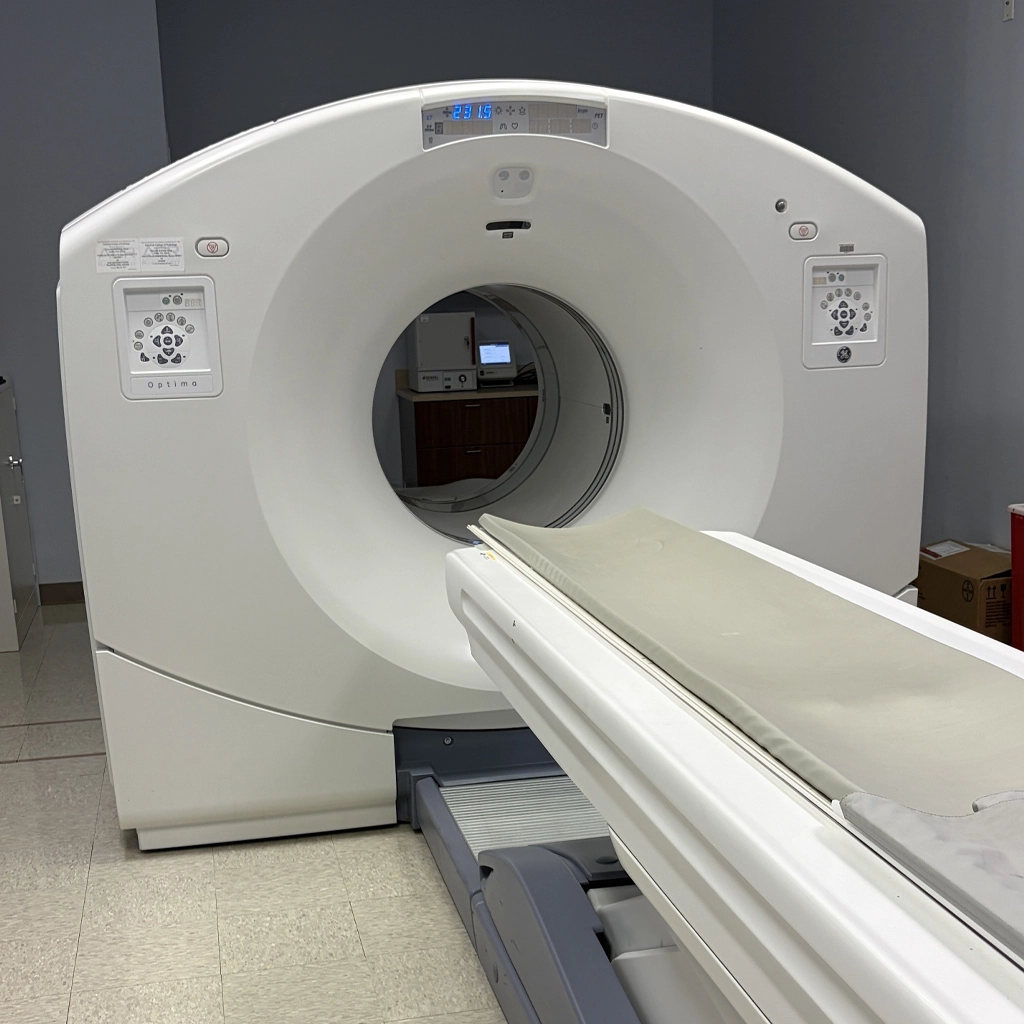

PET-CT Imaging

What Is FDG?

PET-CT scans use a specific radioactive material, called F-18 fluorodeoxyglucose, or FDG. This tracer is a form of glucose (sugar) which is injected through an IV before the PET-CT scan. The PET-CT scanner shows how the body is utilizing the radioactive glucose.

If there is a specific disease present, like certain cancers, the glucose will highlight the lesion as it takes more glucose in than other parts of the body. Physicians can then determine how to best treat those areas.

When Is PET-CT Used?

PET-CT is very accurate in showing the presence or spread of malignant tumors. For example, it is more accurate in detecting the spread of non-small cell lung cancer and recurrent colon cancer than any other imaging method currently available.

PET-CT scans are also highly accurate at identifying lymphoma, melanoma, recurrent breast cancer, esophageal cancer, ovarian cancer, and tumors of the head and neck.

In addition to diagnosing cancer, PET-CT can be used to:

  • Differentiate malignant from benign tissue
  • Identify heart disease and measure heart damage after a heart attack
  • Evaluate the entire body to determine the extent of cancer spread (staging)
  • Assess how well a tumor is responding to chemotherapy or radiation treatment
  • Grade brain tumors to distinguish between recurrence and radiation necrosis
  • Detect foci in epilepsy patients and provide detailed information to support surgical intervention
  • Identify specific types of brain disorders, such as Alzheimer’s or Huntington’s chorea

Are There Risks Associated with PET-CT?

A PET-CT scan is similar to other diagnostic imaging tests such as X-rays or MRI scans. It uses a small amount of radiation that is naturally eliminated from the body soon after the scan. Reactions to the radioactive substance used in PET-CT scans is very rare.

Preparing for a PET-CT Scan

What to bring to the PET-CT scan appointment:

  • A written referral and scan prescription from the referring physician.
  • Any previous CT, MRI, and PET-CT films and reports. The referring physician may arrange to have these sent to University Radiology directly or have you bring them with them on the day of the scan.

Make sure to arrive at least 15 minutes before your scheduled appointment time. Each PET-CT scan appointment time is carefully chosen to ensure that the radiotracers are as fresh as they need to be to obtain an accurate study.

If you can’t arrive on time or need to reschedule your appointment, please call us right away at 732.390.0033.

What To Expect During and After the Scan

When you arrive at our center, you will be asked to complete a history questionnaire. Make sure to tell the technician if you’ve ever had an allergic reaction from contrast agents like those used in CTs and nuclear medicine studies.

We will then check your glucose level. If this level is normal, you will receive a small amount of radioactive glucose in the arm. There will be no side-effects from the injected radiotracer, and you will feel perfectly normal.

You will then wait 30 to 60 minutes while the injected material circulates through your body. A technician will retrieve you and take you to the scanner room. You’ll be asked to lie down on a medical table that is connected to a tube-like machine. The technician will go into a separate room and begin the test.

During the test, the table will move in and out of the tube. You’ll need to lie still, and may be asked to hold your breath at times to ensure clear images. The scan usually takes 30 to 60 minutes to complete. Our technologists will talk with you during the study to provide instructions, make sure you are comfortable, and let you know how long is left in the scan.

When the scan is completed, you will be free to go home. We encourage you to drink plenty of fluids after the scan. You may eat normally and return to your regular activities immediately.

Scheduling, Referrals & Insurance Coverage

To schedule a PET-CT scan appointment, please call University Radiology at 732.390.0033 or use our online scheduling system.

All patients need to be pre-certified with their insurance carrier prior to their scan. Coverage by carriers will vary and is changing rapidly as the clinical value and cost-effectiveness of PET-CT is becoming more well-known. Please let our team know if you have questions about insurance coverage and billing.

For more information about PET-CT Imaging at University Radiology Group, or to schedule an appointment with one of our specialists, please contact us.